
Fated mates are the reason an alien romance can turn a simple survival story into a full-body emotional crisis. One minute, the heroine is trying not to get eaten on a hostile planet. The next, an alien warrior is staring at her like the universe just handed him the answer to every question he’s ever had. Convenient? Absolutely. Complicated? Even better.
I love this trope because it creates instant stakes without removing the heroine’s agency. The bond may be unavoidable. The relationship shouldn’t be. That tension is where the good stuff lives: reluctant attraction, possessive alien heroes, dangerous customs, sharp banter, and a heroine who has every reason to resist the man or men claiming she’s their destined mate.
What makes a fated mate story work
In alien romance, a fated mate bond usually means the characters are biologically, spiritually, culturally, or technologically matched. The exact mechanism changes from series to series. Maybe the alien scents his mate. Maybe his markings react to her touch. Perhaps an ancient mating system identifies her across galaxies, or an alien culture treats the bond as sacred law.
The details matter less than the emotional pressure the bond creates. These characters can’t shrug and walk away after one charged encounter. They have to deal with what the connection means. That can be thrilling when the heroine wants nothing to do with the arrangement, especially when the hero is powerful, morally gray, or entirely too certain that she belongs with him.
But the bond shouldn’t do all the romantic work. I want chemistry, conflict, humor, and actual choices. A magical or biological connection can explain why the characters are drawn together. It can’t replace trust. That has to be earned scene by scene.

Why fated mates are especially fun in alien romance
Alien romance already gives the love story room to play with strange customs and high-stakes circumstances. Add fated mates, and every cultural difference becomes more charged.
To the heroine, a mating ceremony might look like a kidnapping dressed up in jewelry. To the alien hero, refusing the bond might be unthinkable. His people may believe the bond proves compatibility, grants social status, or creates a duty to protect. She may see the same situation as a threat to her freedom.
That clash creates wonderful friction. She has to learn the rules of his world, but she doesn’t have to accept every rule she’s given. And he has to understand that finding his mate doesn’t give him ownership of her.
There’s also the sheer escapist pleasure of it. A heroine who’s been overlooked on Earth becomes the one person an alien warrior can’t resist. A feared commander goes soft for one sarcastic woman. A supposedly practical mating system produces the messiest possible match. I’m a fan of all of that. Romance readers want the emotional payoff, but they also want the ride to be fun.
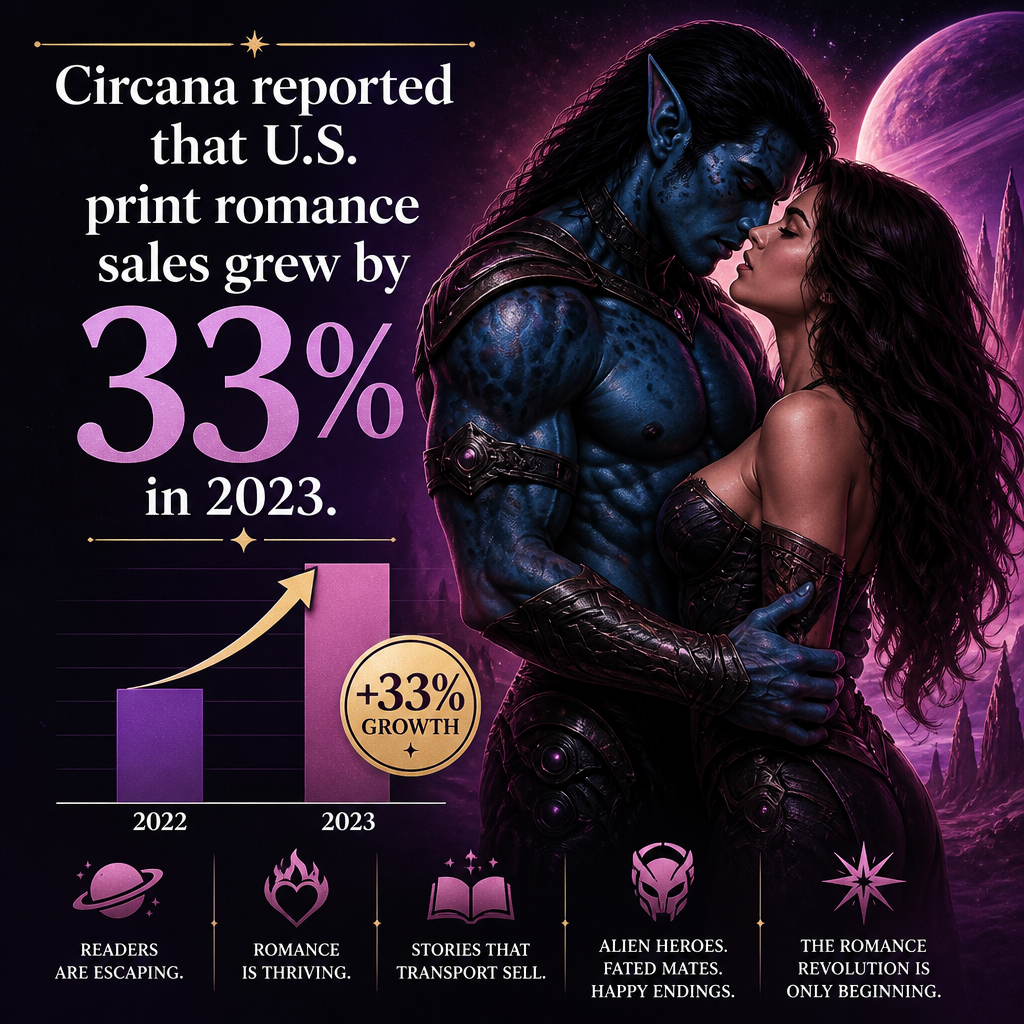
The audience for this trope is clearly hungry for that mix. Circana reported that U.S. print romance sales grew by 33% in 2023. That growth doesn’t prove every reader wants fated mates, of course, but it does show how strongly readers are responding to romance built around intense emotional and romantic stakes.
Common versions of the fated mate bond
The instant recognition bond
This is the classic version. The alien knows almost immediately that the heroine is his mate. Sometimes she feels it too. Sometimes she’s the last person to accept what’s happening.
Instant recognition works best when it creates a problem instead of solving one. The hero may be thrilled, while the heroine is furious. He could be bound to a rival clan. She might be engaged to someone else, hiding from an alien government, or determined to return home. The bond gives them a destination. The plot supplies all the reasons they can’t reach it easily.
The delayed bond
Here, attraction comes first and the fated connection appears later. This version gives the couple more time to build a relationship before the supernatural or biological confirmation arrives.
I like delayed bonds when the characters already care about each other but are holding back. The reveal then raises the question of whether their feelings are real or simply the result of destiny. A confident heroine may push back hard: “Would you still want me without the bond?” That’s a worthwhile question, especially in a possessive hero romance.
The rejected bond
Rejection brings instant angst. One character refuses the bond, denies it, or tries to break it. The reasons can be painful and believable. Maybe the hero has been betrayed before. Maybe the heroine sees the bond as another form of control. Maybe the alien society has turned mating into a political tool, and she wants no part of it.
This trope needs care. The rejected character shouldn’t be punished endlessly for having boundaries. Groveling can be delicious, but it has to lead somewhere. I want accountability, not three hundred pages of the same argument.
Multiple mates and why choose romance
Some alien cultures recognize more than one mate. That opens the door to MFM, reverse harem, and why choose romance, where the heroine doesn’t have to select one man and discard the others.
The strongest stories give each relationship its own texture. One alien may be protective and restrained. Another may be teasing, ruthless, or openly possessive. They shouldn’t feel like copies wearing different armor. Their conflicts with each other can be just as entertaining as the conflict with the heroine.
Consent still matters here. A group bond can be intense without treating the heroine like a prize. I want her to have a voice in the arrangement, and I want the men to negotiate rather than simply announce that she’s theirs. That distinction changes the entire reading experience.
Fated mates, bride lotteries, and forced proximity
Bride lotteries pair naturally with fated mates because both tropes begin with a loss of control. The heroine is selected, transported, or assigned to a new world. Then she discovers that the alien men waiting for her may be her destined mates.
That setup can sound romantic on paper and alarming in practice. The story has to acknowledge the imbalance. A heroine who was placed into a lottery didn’t necessarily consent to the relationship waiting on the other side. Her refusal, anger, and suspicion should matter.
Forced proximity helps develop the romance after the initial shock. The characters may need to share a shelter, cross a dangerous planet, protect one another from predators, or repair a broken ship. There’s nowhere to hide. Every argument happens at close range. Every act of care gets noticed.
That’s the magic combination for me: a bond that says these people belong together, plus circumstances that force them to discover whether they actually like each other. Fate starts the fire. Personality keeps it burning.
Where Runaway Bridezilla fits
In my Hate to Mate series, the fated mate setup collides with an alien bride lottery in the messiest possible way. In Runaway Bridezilla, Cordelia Lucius runs from the Galactic Union Bride Lottery, crash-lands on a hostile planet, and finds herself stuck with Kavros Darkblade and Gorrath Korvax.
They’re the two alien warriors she refused to marry. Naturally, this makes the survival situation a little awkward.
The fun of this setup is that the men don’t simply arrive as perfect romantic answers. They bring rivalry, danger, strong opinions, and their own ideas about what the mating bond means. Cordelia has to survive the planet, but she also has to survive two warriors who believe the connection between them is real. She isn’t quietly swept into a convenient new life. She fights the whole arrangement.
That gives the romance room for the things I enjoy most: sexual tension, possessive behavior that has to be challenged, humor in terrible circumstances, and emotional payoff earned through action. The hostile planet isn’t just background scenery. Survival forces everyone to reveal what they’re willing to do for the others.
How consent fits into a fated mate romance
A fated bond and consent are not the same thing. The bond may be automatic. Sex, commitment, and partnership still need active agreement.
I look for a few signals when I’m reading or writing this trope. The heroine can say no without the story treating her as cruel. The hero may be frustrated, but he doesn’t get to override her. The characters talk about boundaries, even when those conversations are awkward or interrupted by alien danger. And when a hero behaves badly, the story doesn’t pretend possessiveness is automatically proof of love.
That doesn’t mean every hero needs to become mild and perfectly reasonable. Honestly, that would remove much of the fun. A morally gray alien warrior can still be intense, territorial, and dangerous. He just needs to learn the difference between wanting someone desperately and having the right to decide for her.
A 2023 Pew Research Center survey found that 64% of Americans say trust is very important for a successful marriage. That principle fits fictional fated mates too. The bond may create desire, but trust is what makes the happily ever after feel deserved.
Finding your next alien fated mate romance
Pay attention to the balance between destiny and choice. Does the heroine have a real personality beyond being someone’s mate? Do the alien heroes have distinct emotional arcs? Is the world strange enough to feel like science fiction, or is it only a costume around a familiar romance plot?
For high-heat readers, check the relationship structure before starting. Some books focus on one alien hero and one heroine. Others build toward MFM or why choose relationships. The spice level can range from suggestive to explicit, and the treatment of the bond varies just as widely.
My Complete Guide to Alien Romance Books and Tropes is a useful place to compare those ingredients before choosing your next series. I’d also pay attention to tone. A book can contain alien warriors and survival danger while still being genuinely funny. Or it can lean hard into angst and possessive intensity. Neither approach is automatically better. It depends on what kind of emotional chaos you’re craving.
Why this trope keeps pulling readers back
Fated mates promise recognition, but the best alien romances make the characters work for love anyway. The heroine can be chosen by destiny and still choose her own future. The hero can feel an overwhelming bond and still learn patience. That push and pull keeps the trope from becoming a shortcut.
For me, the ideal fated mate romance has dangerous aliens, a heroine with teeth, plenty of sexual tension, and a bond that complicates everything instead of fixing it. Add a hostile planet, a bride lottery gone wrong, or two rival warriors who both refuse to walk away, and I’m probably reading past midnight.