
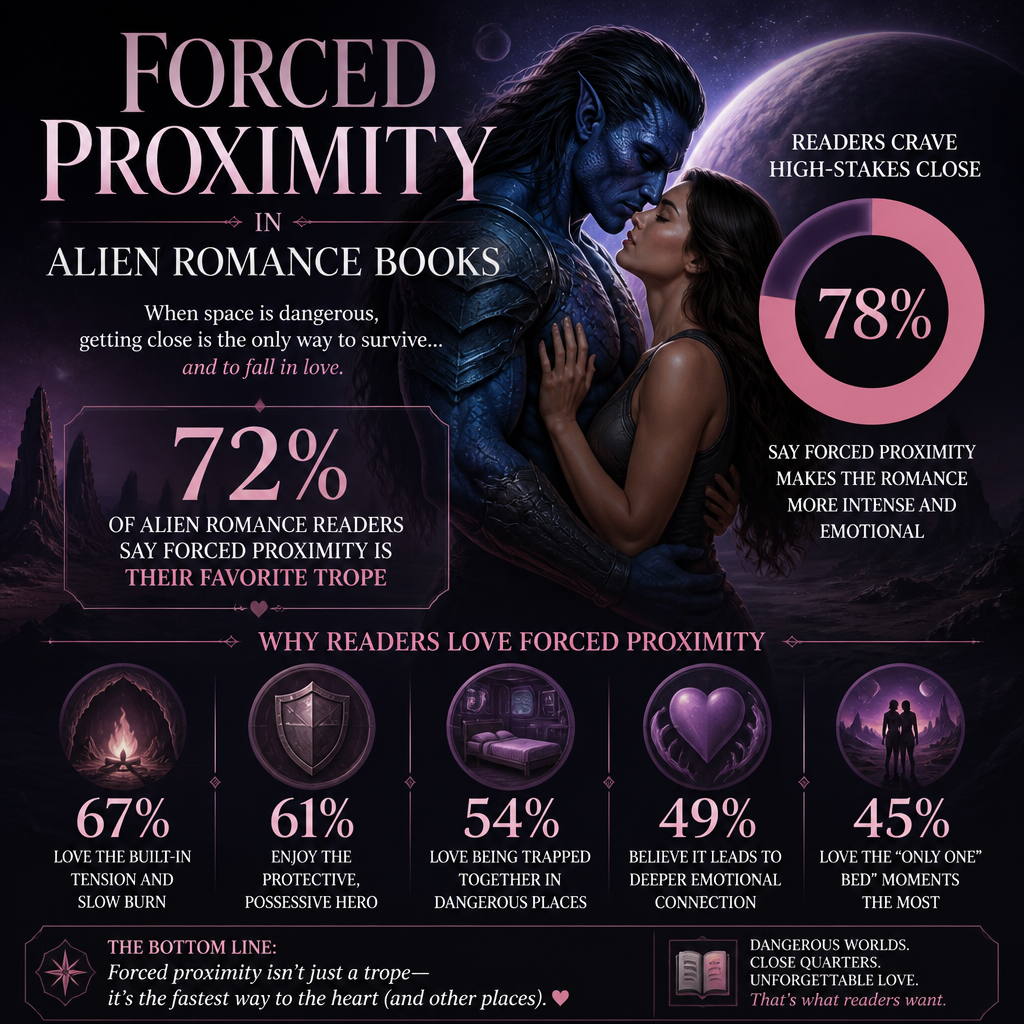
Forced proximity is one of my favorite setups in alien romance because it removes the couple’s easiest escape route. They can argue, distrust each other, resist the mating bond, and still have to share the same shelter before nightfall. That pressure creates delicious tension fast, especially when the heroine is stranded on a dangerous planet with an alien warrior she absolutely does not want.
For readers who love spicy science fiction romance, the appeal goes beyond being stuck in a spaceship or cave together. Forced proximity gives the romance a ticking clock. Survival requires cooperation. Attraction keeps getting in the way. And every small act of care feels loaded.
What forced proximity means in alien romance
In a forced proximity romance, the characters can’t simply walk away from one another. The situation might involve a crash landing, a bride lottery, a military mission, a hostile planet, a damaged ship, or a mating bond neither person asked for. Sometimes all of those problems arrive at once. That’s where alien romance has so much fun.
The setup works particularly well with an alien warrior hero because he may have the strength, knowledge, and territorial instincts needed to keep the heroine alive. He might also be possessive, morally gray, or completely unfamiliar with human boundaries. Helpful? Yes. Easy to live with? Not usually.
The heroine often brings a different kind of power. She may be clever under pressure, stubborn about her independence, funny when terrified, or willing to challenge a culture that expects her obedience. I’m not looking for a heroine who becomes passive just because the planet is dangerous. The best stories let her make decisions, take risks, and push back hard.
That push and pull is the engine. She needs him, but she doesn’t automatically trust him. He wants to protect her, but protection can slide into control. The romance has room to grow because the practical problem keeps forcing emotional honesty.

Why the setup creates such strong sexual tension
Shared space makes every ordinary moment feel intimate. There’s one bed. One heat source. One sleeping shelter. Perhaps the heroine has to clean a wound on the alien warrior’s broad chest while pretending her hands aren’t shaking. Perhaps he hears her breathing change when he gets too close.
Alien romance can heighten those moments with unfamiliar biology and culture. A fated mate bond might make physical attraction impossible to ignore. A scent response might expose feelings before either character is ready to admit them. An alien custom may turn a simple touch into a public claim. Those details make the romance feel specific rather than like a human love story with blue skin added.
The best authors don’t rush straight to the bedroom. They let attraction create trouble first. A possessive hero may grow jealous before he has earned the right to ask for anything. A heroine may enjoy his attention while refusing to surrender her choices. That’s much more satisfying than instant devotion.
Gottman’s widely cited relationship research found that stable couples tend to have about five positive interactions for every negative one during conflict, which helps explain why tender recovery scenes matter so much after a forced-proximity argument.In practice, that means the sharp banter needs relief. Give me the argument, absolutely. Then show me the warrior saving her favorite ration bar, standing guard while she sleeps, or learning one human phrase because it makes her laugh. Those small repairs keep the emotional balance from tipping into exhaustion.
The most effective forced proximity scenarios
Crash landing on a hostile planet
This is a classic for a reason. The characters have immediate physical problems, limited supplies, and nowhere safe to go. The planet itself becomes an antagonist. Strange weather, predatory creatures, toxic plants, and unfamiliar terrain can keep the couple moving even when they’d rather stop and fight.
I especially enjoy a heroine who refuses to be treated like cargo after a crash. She might know emergency medicine, engineering, botany, or something the alien warrior needs. Her competence changes the power balance. He may be stronger, but she isn’t helpless. Now they have to respect one another before they’re emotionally ready.
A bride lottery gone wrong
Bride lotteries add an extra layer of conflict because the relationship begins with a system deciding who belongs together. That setup can be romantic, sinister, absurd, or all three. The heroine may run from the lottery, reject the assigned mate, or discover that the men chosen for her are rivals who can barely tolerate one another.
That last version is perfect for why choose and MFM romance. Forced proximity doesn’t have to trap one heroine with one hero. It can place her between two alien warriors with competing loyalties, different methods of protection, and very different ideas about what she wants.
For this kind of story to work, the men need distinct emotional arcs. One shouldn’t feel like a spare part. I want the heroine to have a real connection with each hero, while the heroes develop their own relationship as well. Rivalry is fun. Emotional teamwork is better.
A reluctant fated-mate bond
Fated mates create an irresistible contradiction: the characters are pulled together by something bigger than themselves, but love still has to be chosen. A mating bond can intensify desire and raise the stakes. It shouldn’t erase consent, personality, or conflict.
That distinction matters. The heroine can feel the bond and still say no. The hero can be overwhelmed by instinct and still learn restraint. Those choices are where the romance earns its payoff.
How survival raises the emotional stakes
Survival romance works because practical dependence exposes emotional habits. Who takes charge? Who shares food? Who admits fear? Who risks a dangerous crossing to retrieve the other person’s lost supplies?
These scenes reveal character without requiring long explanations. A morally gray alien hero might threaten everyone else on the planet but quietly repair the heroine’s broken boot. A tough heroine might mock his dramatic protective instincts, then stay awake beside him when his injuries worsen.
Danger also compresses time. The characters don’t have months to maintain polite distance. They have hours before the storm arrives. They need to decide whether to trust each other before they have all the information. That can make the romance feel fast-paced without making it emotionally thin.
There’s a limit, though. Constant danger can flatten the relationship if every scene is about running, fighting, or hiding. I need pauses. A meal beside a campfire. An awkward conversation about mating customs. A moment when the heroine realizes the alien warrior has been sleeping badly because he’s guarding her.
A 2019 meta-analysis of 43 studies found that perceived partner responsiveness is strongly associated with relationship satisfaction, which is why small signs of being heard and protected carry more weight than grand declarations in many romance plots.
What makes the hero worth being trapped with
A possessive alien hero can be wildly appealing. But possessiveness alone won’t carry a full book. He needs vulnerability, humor, or a believable reason he behaves as he does. Maybe his culture treats protection as a sacred duty. Maybe he’s been betrayed by his own people. Maybe he has no idea how intimidating he is to a human woman who has just crash-landed beside him.
Humor helps here. The alien warrior may be terrifying to everyone else and baffled by hair ties, coffee, or the heroine’s refusal to eat a glowing fruit. Those moments soften him without making him less dangerous.
I also want the heroine to challenge his assumptions. She shouldn’t exist only to heal his trauma. She can call out his controlling behavior, refuse an unfair bargain, and make him prove that his protection includes respect. The payoff lands harder when he changes through actions rather than one emotional speech.
Where Runaway Bridezilla fits
In my Hate to Mate series, Runaway Bridezilla begins with Cordelia Lucius running from the Galactic Union Bride Lottery. Her escape ends with a crash on a hostile planet, where survival means relying on Kavros Darkblade and Gorrath Korvax, the two alien warriors she refused to marry.
That gives the story several kinds of forced proximity at once. Cordelia is stuck on a dangerous world. She has to work with two men she rejected. The men are rivals, and neither is thrilled about sharing her attention. Add fated mating bonds, alien customs, survival pressure, sexual tension, and a healthy amount of humor. Things get messy quickly.
What I love about this setup is that Cordelia doesn’t lose her personality when circumstances turn frightening. She still has opinions. She still resists. Kavros and Gorrath have to earn trust instead of assuming the bond settles everything for them. That combination gives readers the danger and heat of a survival romance without sacrificing the romantic payoff.
How to choose your next forced proximity read
Start with the kind of pressure you enjoy most. Do you want a stranded heroine and one intimidating alien protector? Look for crash-landing and survival plots. Prefer sharp rivalry? Try stories with competing warriors or enemies forced to share shelter.
Readers who love why choose or MFM romance should check whether the heroes have meaningful relationships with one another, not just separate scenes with the heroine. Fans of bride lotteries may want a stronger social conflict around the pairing. And if fated mates are your favorite, look for books where the bond intensifies attraction without removing the heroine’s agency.
Heat level matters, too. Some books build slowly through glances, arguments, and reluctant care. Others bring the erotic tension forward from the opening chapters. Neither approach is automatically better. I prefer a story where the heat matches the emotional progression, especially when the hero starts out possessive or morally gray.
Why forced proximity keeps working
Forced proximity gives alien romance exactly what it needs: pressure, intimacy, and a reason two stubborn people can’t avoid the feelings building between them. The planet may be dangerous. The mating bond may be inconvenient. The hero may be infuriating. But every shared problem creates another chance for trust to form.
For the larger world of The Complete Guide to Alien Romance Books and Tropes, this trope is one of the best entry points because it blends adventure with emotional payoff. I recommend Runaway Bridezilla when you want an escape-from-the-bride-lottery story, two rival alien warriors, high heat, and a heroine who has no intention of making surrender easy.