
Alien romance series deliver guaranteed romantic payoff by making the emotional promise clear, then putting the couple through enough danger, resistance, and desire to make the ending feel earned. The aliens may be terrifying. The planet may be trying to kill everyone. A bride lottery may have made one very bad decision on a heroine’s behalf. But the romance still needs to land.
That balance is what keeps me reading. I want heat, danger, strange customs, and heroes who are a little too possessive for polite society. I also want to trust the story with my time. The couple needs to get somewhere emotionally, not just physically end up in the same sleeping chamber.
The romantic promise starts before the first kiss
Readers know what kind of journey they’re buying
A strong alien romance series establishes its romantic contract early. That contract might involve fated mates, an arranged pairing, a bride lottery, forced proximity, or two hostile warriors who suddenly have one human woman in common. Whatever the setup, I should understand the central tension quickly.
That doesn’t mean every detail needs explaining on page one. It means the story gives me a reason to care. Why are these people drawn together? What stands between them? What will make the eventual commitment difficult?
In a why choose or MFM romance, the promise has another layer. Each hero needs his own emotional connection with the heroine, and the relationship between the heroes needs its own charge. Rivalry can be delicious. So can reluctant cooperation. But the story has to show how shared desire becomes trust instead of treating the second hero like an accessory.
Heat works best when it changes the relationship
Spice can absolutely be playful, outrageous, and gloriously over the top. I like all of that. Still, the most satisfying intimate scenes reveal something. A guarded alien warrior shows vulnerability. A heroine stops pretending she isn’t affected. Two rivals discover that jealousy is easier to admit than fear.
That emotional movement creates payoff. The bedroom scene isn’t only a reward for waiting. It shifts the terms between the characters.

Obstacles make the happily ever after feel real
Danger keeps attraction from becoming the whole plot
Alien romance thrives on pressure. Hostile planets, political systems, alien traditions, survival shortages, family expectations, and enemies with unpleasant timing all make the romance work harder. The setting should create problems that ordinary contemporary romance can’t provide.
A heroine who crash-lands on an unfamiliar planet can’t simply leave after an argument. She has to find shelter. She may need food, protection, or help understanding a world that wants her dead. Forced proximity happens naturally under those conditions. So does the uncomfortable realization that the dangerous alien she distrusts might be the person keeping her alive.
That setup gives attraction room to develop through action. He shares supplies. She takes a risk to save him. They argue over leadership, then discover they make a frighteningly good team. I’ll take that over endless internal monologue about how intense his eyes are.
The conflict has to bend without breaking the romance
Not every obstacle helps. A villain who appears for five pages and vanishes won’t create meaningful tension. Neither will a misunderstanding that could be solved by one honest sentence.
The best conflict tests the couple’s deepest fear. A possessive hero may need to learn that protection isn’t ownership. A heroine running from control may need to decide whether accepting love means losing herself. Morally gray behavior can add heat, but the story still needs emotional accountability. Otherwise, the romantic payoff starts to feel like a prize handed to characters who haven’t earned it.
Series structure gives every couple room to change
Interconnected stories keep the larger world alive
One book can deliver a satisfying happily ever after. An interconnected series adds something different. The romance closes, but the world keeps moving. Side characters become future leads. Earlier choices create later trouble. A political conflict that sat in the background suddenly matters to the next couple.
This format works especially well for alien romance because the setting usually has more strange corners than one book can handle. I may start with an alien warrior and a stranded human, then become curious about the rival, the reluctant commander, or the woman who escaped the same system for completely different reasons.
For readers who enjoy the larger landscape of The Complete Guide to Alien Romance Books and Tropes, interconnected series offer a steady supply of familiar pleasures with new emotional combinations. The world develops without forcing every romance to carry every plot thread.
Recurring themes create trust
A series earns loyalty by repeating the things readers came for while changing the details. Maybe every book features dangerous alien cultures, but each heroine responds differently. Maybe mating bonds appear throughout the series, yet one character embraces the bond while another fights it with impressive stubbornness.
That pattern matters. I want to know the author understands the fantasy I came for. I also want enough variation to avoid reading the same emotional argument three times in a row.
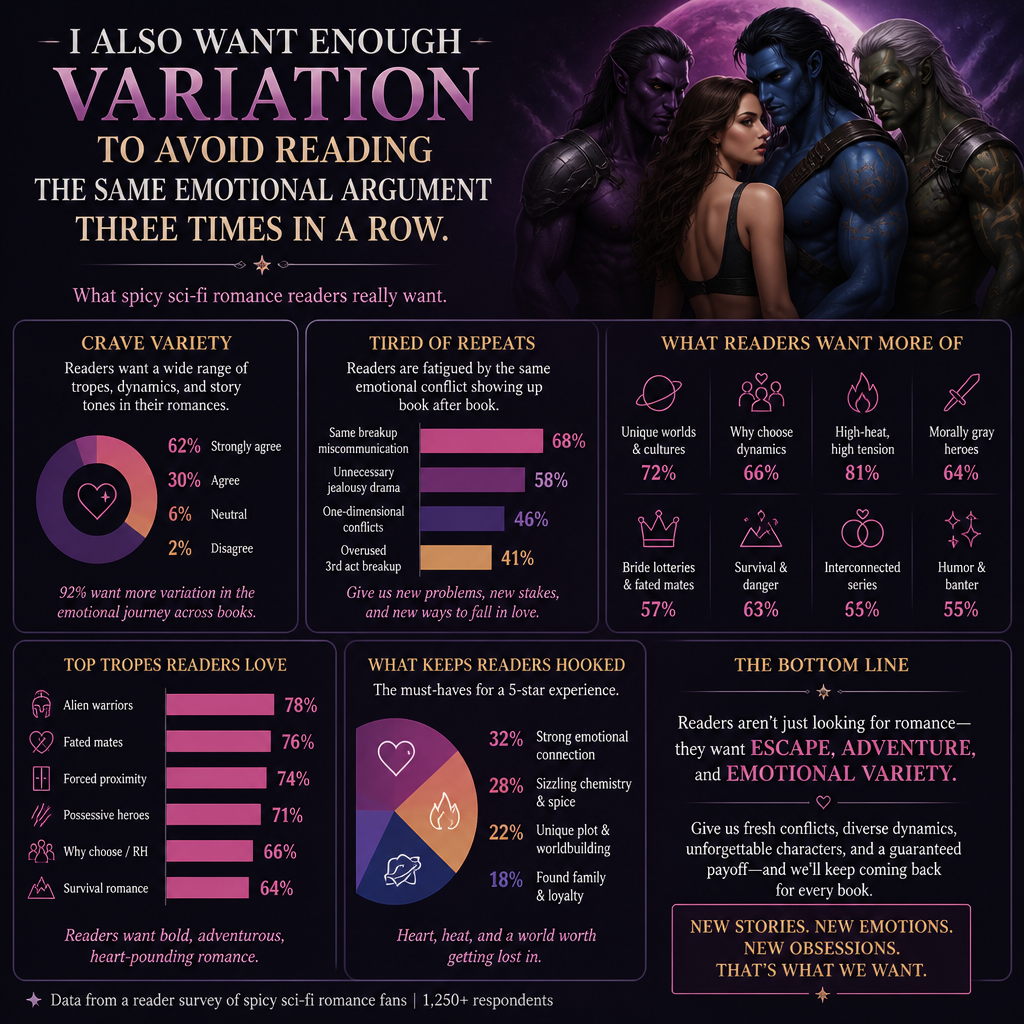
In my experience, the strongest series keep their core promise visible: high heat, emotional intensity, danger, and a real romantic destination. The route can get chaotic. The destination shouldn’t disappear.
Runaway Bridezilla turns romantic certainty into a problem
A bride lottery is only romantic when the heroine has agency
Runaway Bridezilla, Book 1 of Mia Odetti’s Hate to Mate series, plays with a setup that sounds neat on paper and becomes a disaster in practice. Cordelia Lucius runs from the Galactic Union Bride Lottery, crash-lands on a hostile planet, and ends up needing the two alien warriors she refused to marry.
That reversal is the fun of it. The system claims to know who belongs together. Cordelia has other ideas. She isn’t waiting quietly for destiny to assign her a husband, and the story doesn’t require her to surrender her judgment just because two dangerous aliens are interested.
Then there are Kavros Darkblade and Gorrath Korvax. They’re rivals, warriors, and deeply inconvenient survival partners. Their conflict gives the romance a sharp edge, while the hostile planet keeps everyone too busy staying alive to indulge in simple avoidance.
Why choose tension raises the stakes
With two heroes, romantic payoff can’t rely on one grand declaration. The heroine needs distinct bonds with both men. The men need to confront what they want from each other as well as from her. Possessiveness, jealousy, attraction, and reluctant teamwork all get more interesting when nobody can pretend this is a straightforward pairing.
Readers looking for Why Choose Alien Romance and MFM Books will recognize the appeal. The fantasy isn’t merely having two handsome aliens nearby. It’s watching a relationship form that refuses to fit the usual shape, while still offering emotional security at the end.
- A heroine who resists being treated like a prize
- Two rival alien warriors with unfinished business
- A forced-proximity survival setup
- Fated-mate tension without instant emotional surrender
- High heat balanced with humor and adventure
FAQs for How Do Alien Romance Series Deliver Guaranteed Romantic Payoff
Does guaranteed romantic payoff mean the story has no surprises?
Not at all. It means I can trust the story to honor its central romantic promise. The route can include betrayals, dangerous revelations, separation, or a hero making a spectacularly bad decision. Those surprises work because the emotional destination remains clear. A guaranteed happily ever after doesn’t make the middle predictable. It gives the middle room to get wild.
Why do alien romance readers enjoy fated mates and forced proximity together?
Because the two tropes pull in opposite directions. A mating bond suggests certainty, while forced proximity creates resistance. The characters may be destined for each other, but they still have to choose each other. That distinction is where much of the tension lives. It also gives a strong heroine space to challenge the bond, the culture around it, and the heroes who assume fate has already settled the argument.
The payoff should feel inevitable only afterward
The best alien romance series make the ending feel both surprising and right. The characters don’t arrive there because the author ran out of pages. They get there because every argument, rescue, intimate moment, bad choice, and reluctant act of trust pushed them closer.
That’s why I recommend looking for series with a clear romantic promise, meaningful obstacles, distinct hero dynamics, and heroines who retain their agency. Runaway Bridezilla brings those ingredients together with alien bride lotteries, rival warriors, survival danger, fated-mate tension, humor, and a high-heat MFM setup.
So yes, give me the hostile planet. Give me the possessive alien and the morally gray rival. Just make the emotional payoff count. That’s the part I’m really reading for.