
Alien warrior romances work because danger makes devotion visible. A possessive hero can say, “You’re mine,” but that claim means more when he’s also willing to cross a toxic wasteland, challenge his own command, or put his body between his mate and a six-legged predator. The fantasy isn’t danger for its own sake. It’s watching a ruthless alien choose tenderness, restraint, and loyalty when nobody else expects it from him.
That balance gets especially delicious in spicy science fiction romance. You get forced proximity, survival stakes, fated mates, rival warriors, and a heroine who isn’t waiting around to be rescued. The heat matters. So does the emotional payoff underneath it.
Danger gives devotion something to prove
Protection has to cost the hero something
A dangerous setting creates pressure, and pressure reveals character. On a peaceful planet, a morally gray alien hero might seem merely intense. Put him on a hostile world with scarce shelter and enemies closing in, and his choices become much louder.
Does he give the heroine the last working heat pack? Does he stay awake while she sleeps? Does he risk punishment from his war clan because she refuses an order? Those small decisions often land harder than a dramatic declaration of love.
In my experience, readers want the alien warrior to be frightening to everyone else but unexpectedly careful with his mate. That contrast is the treat. He can break a rival’s weapon, then quietly braid the heroine’s hair because her hands are shaking. He can command a battlefield, then ask before touching her. Dangerous outside the relationship. Devoted inside it.
The heroine should still have choices
Survival romance gets less satisfying when the heroine loses every form of agency. She might be stranded, hunted, or trapped by circumstances, but she still needs decisions that change the story. Maybe she knows how to repair the escape pod. Maybe she refuses to accept the warrior’s protection without negotiating terms. Maybe she saves him when he’s injured and furious about needing help.
That push and pull keeps the romance alive. Danger brings them together, but mutual respect gives the relationship staying power.

Possessiveness works best with earned trust
Possessive alien heroes are catnip for many romance readers. I understand why. There’s something deeply satisfying about a feared warrior looking at one woman as if she’s the only safe place in the galaxy. But possessiveness can’t do all the emotional work.
The hero needs to learn the difference between guarding someone and controlling her. Those aren’t the same thing. A bond, a bride lottery, or an alien mating custom may create the initial claim, but the heroine’s willing choice is what makes the romance feel complete.
That’s where morally gray heroes get interesting. He may have done terrible things before the story begins. He may be ruthless with enemies and deeply suspicious of the Galactic Union. He may even believe that keeping the heroine close is the only way to keep her alive. Fine. Let him believe that at the beginning. The story should still make him grow.
- He listens when she says no.
- He explains the risks instead of hiding them.
- He gives her useful information, even when it weakens his position.
- He apologizes without turning the apology into a demand for comfort.
- He protects her freedom as fiercely as he protects her body.
Those moments turn possessiveness into devotion rather than simple domination. And yes, the intense claiming language can still be wonderfully spicy. It just needs emotional groundwork underneath it.
Alien culture makes the romance feel bigger
Fated mates are not a substitute for chemistry
Fated mating bonds are popular because they create instant stakes. The characters can’t casually walk away from each other. Their bodies may react before their minds catch up. That’s fun, especially when one or both characters are determined to resist.
But the bond shouldn’t magically solve every problem. It needs to collide with personality, history, and cultural expectations. A warrior might regard the bond as sacred. The heroine might see it as another system taking control of her life. Now there’s conflict worth reading.
The emotional question becomes sharper: will they love each other because fate ordered it, or will they build something that fate alone couldn’t provide?
Customs can create both humor and conflict
Alien cultures give authors room to play. A warrior may consider public arguments a form of courtship. A heroine may accidentally insult an entire clan while trying to be polite. A bride lottery could be treated as a prestigious honor by one society and an outrageous abduction scheme by another.
That cultural friction keeps a high-heat romance from becoming a string of bedroom scenes connected by convenient danger. The characters have to interpret each other. They misunderstand things. They make assumptions. Sometimes they’re hilariously wrong.
In Runaway Bridezilla, Cordelia Lucius runs from the Galactic Union Bride Lottery, crash-lands on a hostile planet, and ends up with Kavros Darkblade and Gorrath Korvax, the two alien warriors she refused to marry. That setup lets danger and attraction interfere with each other constantly. She isn’t simply waiting to discover that the lottery was right. She has opinions. Loud ones. And the warriors have to earn their place beside her.
Readers who enjoy unusual alien customs can find more romance recommendations through The Complete Guide to Alien Romance Books and Tropes.
Why two warriors can intensify the emotional stakes
Why choose and MFM romance add another layer to the balance between danger and devotion. Two alien warriors don’t just offer twice the protective energy. They create disagreement, jealousy, negotiation, and different styles of care.
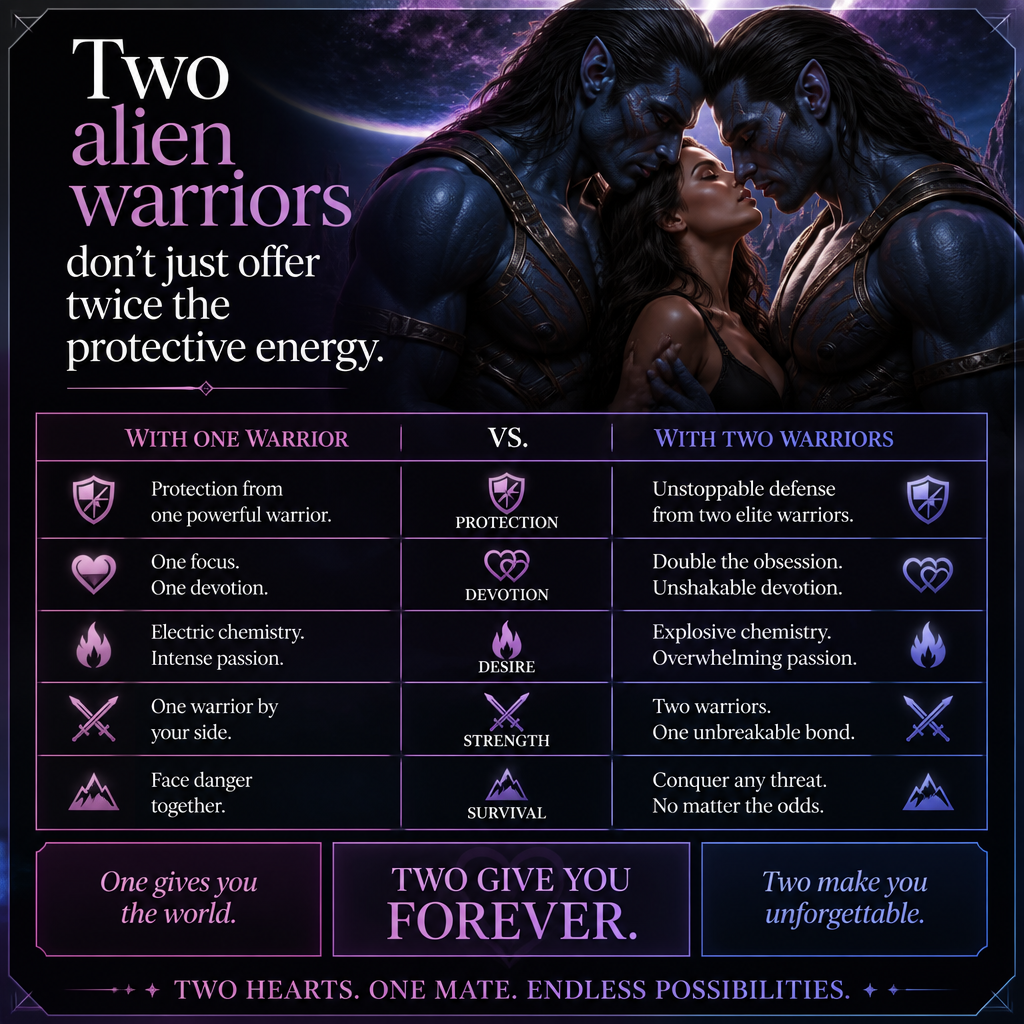
One hero might be strategic and controlled. The other might be impulsive, possessive, and ready to fight anything that looks at the heroine too long. The heroine gets to respond to each man as an individual, not as part of a matching set.
That distinction matters. I’m not a fan of why-choose romances where the men blur together. Each relationship should have its own rhythm. Maybe one warrior understands her fear before she says it. Maybe the other challenges her when she starts making reckless decisions. Maybe both of them have to confront the fact that devotion isn’t a competition.
Danger can bring a trio into alignment, but it can also expose cracks. Who leads when the group is attacked? Who gets trusted with the escape route? What happens when one man’s cultural rules conflict with another’s?
The best MFM romances don’t erase those tensions too quickly. They let the characters build a working emotional agreement. The heroine isn’t an object being passed between two powerful men. She’s the person whose trust both warriors need to earn.
For readers specifically hunting possessive alien heroes, forced proximity, and morally gray warriors, I keep my recommendations focused on the kinds of high-heat stories where the romantic payoff is part of the promise. You can browse Alien Warriors and Morally Gray Heroes for more of that particular flavor.
FAQs for How Do Alien Warrior Romances Balance Danger and Devotion
Why are dangerous alien warriors so appealing in romance?
Because the contrast is intense. A warrior who is feared by an entire planet but gentle with one woman creates immediate emotional tension. Readers get the fantasy of absolute protection, then watch the hero learn that love requires more than strength. He has to listen, respect boundaries, and choose the heroine when choosing her costs him something.
Do alien warrior romances always include fated mates or forced marriage?
No. Those tropes are common, but they aren’t required. Alien romance can use arranged matches, bride lotteries, enemies to lovers, survival partnerships, abduction setups, or a simple crash landing that strands two people together. Fated mates add a powerful external pull. The relationship still needs chemistry and choice to feel satisfying.
The balance readers are really looking for
Alien warrior romances balance danger and devotion by making the hero’s tenderness an active choice. The hostile planet matters. The warrior’s reputation matters. The mating bond, bride lottery, and cultural rules all add pressure. None of them should replace the heroine’s agency or the couple’s emotional work.
That’s why the setup in Runaway Bridezilla has so much room for heat and conflict. Cordelia doesn’t simply accept the future chosen for her. Kavros and Gorrath don’t get instant access to her trust just because they’re powerful, bonded, or attracted to her. They have to survive the planet, face their own rivalry, and prove that devotion can leave room for choice.
For me, that’s the sweet spot: sharp danger, ridiculous cultural misunderstandings, overwhelming attraction, and heroes who become safer without becoming less dangerous to everyone else. Give me the warrior who can terrify a battlefield and still learn exactly how his mate takes her coffee. That’s the romance.