
Alien warriors protect their human mates through a mix of physical strength, fierce loyalty, cultural duty, and very personal possessiveness. The best alien romance doesn't stop at “he's big and dangerous.” It shows what that danger costs him, what the human heroine can do for herself, and how their bond changes the way he faces every threat.
That balance matters. I want the alien hero to be terrifying to everyone else, but not careless with the woman he loves. Give me a dangerous planet, a forced proximity setup, some teeth-baring jealousy, and a heroine who refuses to become decorative. That's where this trope gets fun.
Protection starts with reading the real danger
He learns what threatens her specifically
An alien warrior usually has an advantage over the human heroine. He knows the planet, the weapons, the predators, or the political system. She doesn't. But strong stories don't treat her as helpless forever. The warrior pays attention to what she actually needs instead of throwing her over his shoulder every time trouble appears.
Maybe she can climb faster than he can. Maybe she understands a machine he can't operate. Maybe her knowledge of human customs saves them from a diplomatic disaster. His protection becomes sharper when he sees her as a capable partner rather than a fragile possession.
That doesn't erase the possessive streak. Honestly, I like a possessive alien hero when the story gives that instinct some boundaries. He can growl at a rival, stand between her and a blade, or make it very clear that anyone hunting her has chosen a bad day. He still needs to respect her decisions. The tension lives in that push and pull.
He prepares instead of only reacting
Protective behavior also shows up in small choices. He checks the shelter before she enters. He tests unfamiliar food. He memorizes the route to safety. He teaches her which sounds mean danger and which ones are harmless. None of that needs a dramatic speech.
In practice, those details make the alien world feel lived in. They also make the mating bond feel earned. He isn't protecting a vague idea of “his mate.” He knows her habits, her fears, her stubborn spots, and the exact expression she makes before doing something reckless.
For readers who enjoy the wider landscape of this trope, my Complete Guide to Alien Romance Books and Tropes covers the other familiar ingredients, including fated mates, bride lotteries, survival romance, and why choose stories.

Physical protection is only one layer
The warrior puts his body on the line
Yes, sometimes the fantasy is exactly what it promises. The alien warrior is larger, stronger, armored, and built for a world that would chew through a human in minutes. He carries her across dangerous terrain. He takes the hit meant for her. He guards the entrance while she sleeps.
Those scenes work best when the physical difference creates a problem as well as solving one. His body may be stronger, but his instincts can make him overconfident. He might underestimate a clever human enemy. He may assume brute force fixes everything, only to discover that the heroine's strategy gets them out alive.
I especially enjoy survival scenes where the protection goes both ways. He fights off a predator. She notices the poisoned water. He breaks open a sealed door. She realizes the symbols are a warning, not an invitation. That's romance with actual teamwork in it.
He protects her during intimacy too
In high-heat alien romance, protection doesn't disappear once the clothes come off. The hero may be bigger, stronger, or biologically different. Consent and communication matter even more in that setup. A good scene makes the intensity feel wanted, not imposed.
That can look like him watching her reactions, slowing down when she needs it, or letting her set the pace even while his instincts are running hot. The possessive language can stay deliciously sharp. The heroine's choice should remain clear.
For me, the best payoff comes when the supposedly unstoppable warrior is careful with one person. Not soft with everyone. Just deeply attentive to her.
His culture often turns protection into a promise
A mate may change his social position
Alien societies give this trope extra bite. A mating bond might carry legal status, religious meaning, military consequences, or a claim that rivals want to challenge. The warrior isn't only keeping his human mate away from claws and weapons. He may be defending her from his own people.
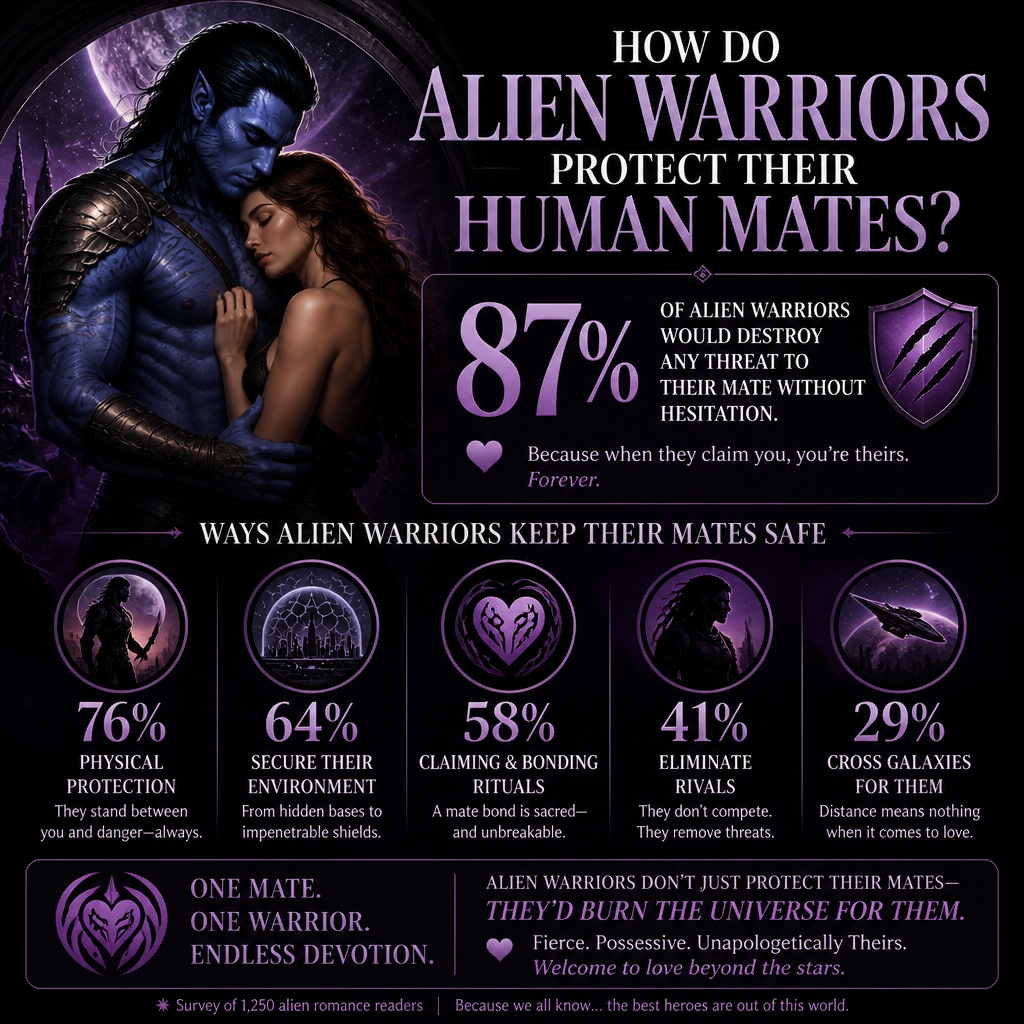
That creates delicious pressure. His family might consider her an outsider. His commander might order him to surrender her. A rival could argue that the bond isn't valid because she is human. Suddenly protection means standing against the rules that shaped him.
Morally gray heroes are particularly effective here. He may have served a cruel ruler. He may have taken part in raids. He may believe fear is the cleanest way to control a threat. The human mate doesn't magically make his past disappear. She forces him to decide which parts of himself he is willing to keep.
Protection can become rebellion
Sometimes the warrior's biggest act of protection is refusing to obey. He breaks a contract. He betrays an alliance. He turns against the bride lottery that assigned her to someone else. He risks exile because sending her away would be worse.
That kind of choice gives the romance weight. The mating bond might pull them together, but a bond alone isn't enough. He still has to choose her when choosing her costs him rank, safety, or the approval of everyone who raised him.
In Runaway Bridezilla, the setup plays with exactly that kind of pressure. Cordelia Lucius runs from the Galactic Union Bride Lottery, crash-lands on a hostile planet, and ends up relying on Kavros Darkblade and Gorrath Korvax, the two alien warriors she refused to marry. Protection gets complicated when the men she escaped are also the men keeping her alive.
The strongest heroines make protection mutual
She isn't waiting around for rescue
A human mate can accept protection without surrendering her agency. She can demand the truth, make the plan, steal the vehicle, or tell the warrior that his brilliant idea is terrible. Especially that last one.
Forced proximity works because the characters can't avoid seeing each other clearly. The heroine notices his habits. He notices her courage. They argue over supplies, routes, weapons, and sleeping arrangements. Somewhere in that friction, protection becomes less about ownership and more about trust.
One quick test I use when reading these stories is simple: does the heroine have something important to contribute after the warrior arrives? Look for moments like these:
- She spots a danger his instincts miss.
- She negotiates with people he would intimidate.
- She makes a hard decision while he is injured.
- She challenges his ideas about duty and possession.
- She protects his emotional weak point.
That last one can hit hardest. Alien warriors are often trained to survive pain, but they aren't always prepared to be known. The human mate may protect him by refusing to let him hide behind violence. She sees the grief, guilt, or fear beneath the armor.
Why two warriors can raise the stakes
In MFM and why choose romance, protection can come from different directions. One hero might be the planner. Another is the fighter. One understands court politics. The other knows the wilderness. Their rivalry creates friction, but it can also create a stronger safety net around the heroine.
That dynamic only works for me when the heroine remains central. She isn't a prize passed between two men. Her choices shape the relationship. She can want both warriors for different reasons, and the men have to deal with that honestly.
Readers who enjoy the possessive, dangerous side of these romances may also want to browse Alien Warriors and Morally Gray Heroes. That's where the protective instincts get especially messy, and usually much more entertaining.
FAQs for How Do Alien Warriors Protect Their Human Mates
Are alien warriors always overprotective?
No. Overprotectiveness is common, especially with fated mates and survival romance, but it isn't required. Some heroes guard through planning and teaching instead of constant physical control. Others need to grow out of treating protection like ownership.
The most satisfying version usually has an arc. He starts with a rigid idea of what keeping her safe means. She pushes back. They find a better arrangement together.
Why is this trope so popular in spicy alien romance?
Because it combines danger with emotional reassurance. The heroine can be facing a deadly planet, hostile aliens, or a marriage she never wanted, yet one intensely devoted warrior is watching her back. That contrast creates strong sexual tension.
It also leaves room for humor. A heroine who has just escaped a bride lottery may not appreciate being treated like precious cargo. Watching her argue with a seven-foot alien about survival rules can be just as satisfying as the eventual mating scene.
Protection works best when it becomes partnership
Alien warriors protect their human mates with strength, strategy, cultural power, sacrifice, and sometimes a frankly unreasonable amount of jealousy. But the romance lands when protection changes over time.
At the beginning, he may be guarding a stranger. By the end, he knows her mind, trusts her judgment, and chooses her even when his world says he shouldn't. She isn't merely sheltered by his strength. She gives him a reason to use it differently.
That's the promise I look for in a high-heat alien romance: danger outside, intense attraction inside, and two or more stubborn people learning that survival is easier when nobody has to stand alone. For that particular mix of alien bride lottery chaos, rival warriors, fated bonds, and hostile-planet adventure, Runaway Bridezilla is a natural place to start.