
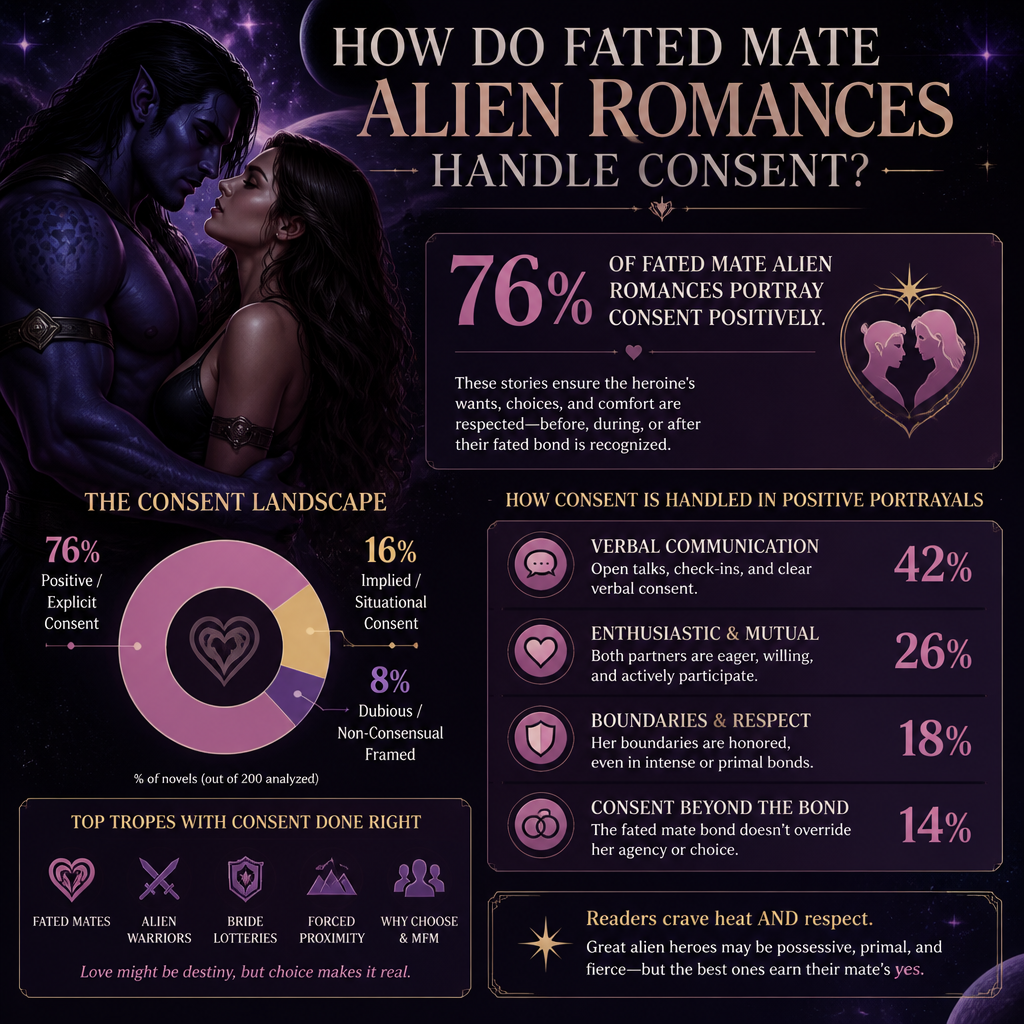
Fated mating doesn’t equal automatic consent. That’s the line I want firmly drawn, especially in spicy alien romance where biology, destiny, possessive alien warriors, and dangerous circumstances can all push characters together fast. A mating bond may create intense attraction or a cultural expectation, but the heroine still needs room to choose what happens to her body, her relationship, and her future.
That doesn’t make the trope less dramatic. Honestly, it usually makes the romance hotter. A hero who wants the bond but understands he can’t claim her without permission gives the story delicious tension. He has power, desire, and sometimes a very questionable moral compass. She still gets to say yes, no, not yet, or absolutely not.
What the mating bond can and cannot decide
Fate creates pressure, not permission
In many alien romance books, the fated mate connection shows up as scent recognition, psychic awareness, physical symptoms, or a biological response neither character understands at first. The bond might make separation painful. It might sharpen sexual tension. It might convince an alien warrior that the heroine belongs beside him.
That’s a character belief, though. It isn’t a consent rule.
The strongest stories make this distinction clear. The alien hero can feel certain that she’s his mate while still asking what she wants. He might struggle with jealousy or possessiveness, but he doesn’t get to treat a mystical connection as a signed contract. That struggle gives the romance somewhere to go. Watching a morally gray hero learn restraint can be far more satisfying than watching him bulldoze every boundary because “the bond made him do it.”
Readers who love The Complete Guide to Alien Romance Books and Tropes usually know the appeal already. Fated mates bring urgency. Consent keeps that urgency from turning into emotional theft.
Consent needs to stay active
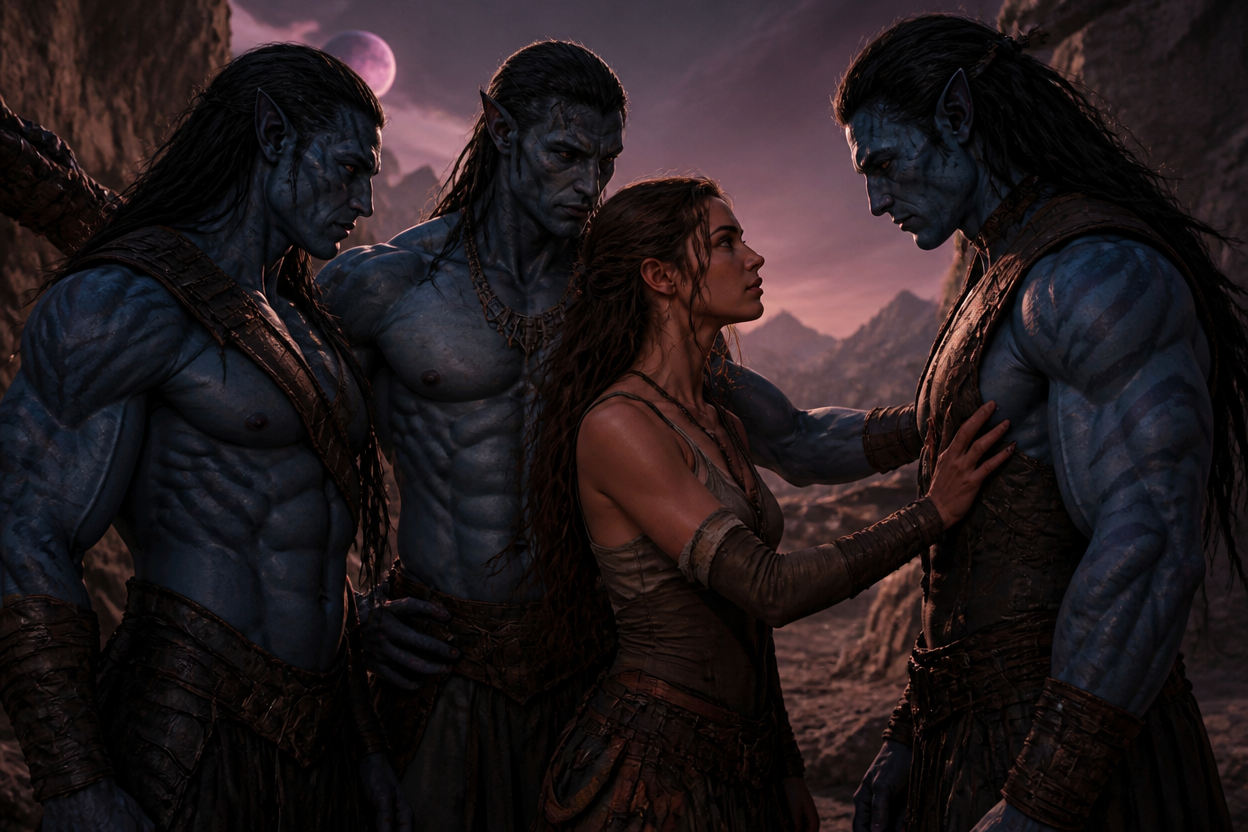
Consent isn’t one yes at the beginning of a book. It can change during a scene, after a revelation, or when the heroine learns what the bond actually means. A character may want sex but not mating. She may want one alien warrior and feel uncertain about the second. In a why choose or MFM romance, each relationship needs its own emotional agreement.
That last part matters. One enthusiastic yes doesn’t automatically cover everybody involved.
How alien cultures complicate the question
Different customs still need clear choices
Alien cultures often treat mating as a social, religious, or biological event. A bride lottery might assign a woman to a powerful warrior. A clan could believe that a mate bond outranks individual preference. Maybe the alien planet has no human concept of dating at all.
Those customs can create excellent conflict. They shouldn’t erase the heroine’s interior life.
In practice, I look for a few signals that the story understands the difference:
- The heroine gets information about the bond and its consequences.
- She can voice refusal without the narrative treating her as irrational.
- The heroes notice fear, hesitation, or silence instead of ignoring it.
- There are meaningful consequences for crossing a boundary.
- Attraction grows alongside trust, not as a replacement for it.
The alien heroes don’t have to agree with her choices. They can be furious, confused, or terrified of losing her. That’s where the emotional sparks live. But the book should show that her choice remains real, even when the culture around her says otherwise.
Power differences deserve attention
Alien warriors often have more physical strength, social authority, survival knowledge, and control over resources. Add forced proximity, a hostile planet, or a crashed spaceship, and the heroine may depend on them for food and safety. That can make consent murky fast.
A thoughtful romance doesn’t pretend those pressures vanish. It lets the characters address them. Maybe the hero gives her access to weapons, shelter, or transportation without demanding sexual payment. Maybe he explains what the bond does before touching her. Maybe she tests whether his protection comes with strings attached.
Those details build trust better than a speech about being honorable.
Why forced proximity can still support consent
Survival is not seduction
Survival romance thrives on limited options. The heroine crash-lands on a dangerous world. Two alien warriors are the only people who can keep her alive. She’s cold, injured, hungry, and very aware that both men want her. That setup is intense. It’s also exactly when a writer needs to separate practical help from sexual access.
A blanket should be a blanket. Medicine should be medicine. A guarded camp shouldn’t become a trap just because the chemistry is scorching.
That doesn’t mean there can’t be sexual tension. Quite the opposite. Restraint can make every glance feel loaded. The alien warrior who sleeps outside her shelter because she hasn’t invited him in? Very effective. The heroine choosing to close the distance later? Better still.
Look for the heroine’s active participation
In my experience, readers accept a lot of danger and intensity when the heroine remains emotionally present in her own story. She can make mistakes. She can be reckless. She can want the possessive hero even while arguing with him. What matters is that the narrative doesn’t confuse her lack of alternatives with enthusiastic desire.
Runaway Bridezilla, the first book in Mia Odetti’s Hate to Mate series, plays with that pressure through a runaway bride lottery, a hostile planet, and two alien warriors Cordelia never planned to marry. Kavros Darkblade and Gorrath Korvax aren’t simply safe, polished love interests. They’re rivals, survival partners, and men with strong ideas about the mating bond. That gives Cordelia plenty to push against, which is exactly what makes the romantic payoff matter.
She isn’t interesting because fate picked her. She’s interesting because she keeps making choices while fate, danger, and two infuriating warriors crowd the room.
What readers should watch for in high heat scenes
Heat works better with communication
Consent doesn’t require every intimate scene to sound like a legal deposition. Nobody wants a steamy alien romance interrupted by stiff, unnatural dialogue. But small signals go a long way: a question, a pause, a hand waiting for permission, a hero noticing that the heroine has gone still.
Good communication can be sexy. “Tell me what you want.” “Do you want me to stop?” “You can change your mind.” Those lines don’t weaken a possessive hero. They show that his desire isn’t more important than her comfort.
And sometimes the heroine is the one setting the pace. She may tease the warriors, initiate a kiss, or decide when the bond becomes physical. That agency is especially important in MFM and why choose romance, where the emotional negotiation is part of the fantasy.
Red flags depend on the story’s framing
Some readers enjoy darker behavior, coercive threats, or heroes who start out dangerously controlling. I do too, in the right book. The question isn’t whether the hero is flawed. It’s whether the story understands what he did and allows the heroine to respond honestly.
A possessive hero can become protective without being excused. A cruel alien culture can be challenged. A mating bond can be resisted. What bugs me is when the heroine’s fear is treated as proof of attraction, or when a violation gets waved away because the hero is handsome and destined.
Romance can contain risk without endorsing every action. The emotional consequences need to count.
FAQs for How Do Fated Mate Alien Romances Handle Consent
Can a fated mate bond be rejected?
Often, yes, depending on the rules of the book. Some stories make rejection painful or politically dangerous. Others let characters break the bond entirely. Even when rejection has a cost, the heroine should understand that cost and make the decision herself. Fate can raise the stakes. It shouldn’t remove the choice.
Is a bride lottery automatically nonconsensual?
A bride lottery starts with a coercive setup because someone else has assigned a life-changing outcome. That doesn’t mean the entire romance must remain coercive. The story can give the heroine information, escape routes, bargaining power, and the ability to reject the assigned match. In a book like Runaway Bridezilla, the fun comes from watching a woman refuse to accept that a lottery gets the final word.
The takeaway for fated mate romance readers
Fated mates, alien bride lotteries, forced proximity, and survival danger can all create fantastic romantic pressure. None of them should replace consent. The bond may be powerful. The alien warriors may be intense. The planet may be trying to kill everybody before breakfast.
Still, the heroine’s yes needs to belong to her.
That’s the version of the trope I recommend: huge chemistry, complicated alien customs, dangerous heroes, and a woman who gets to decide what the bond means. For more romance with reluctant mates and high-heat alien adventure, take a look at Fated Mates in Alien Romance Books.