
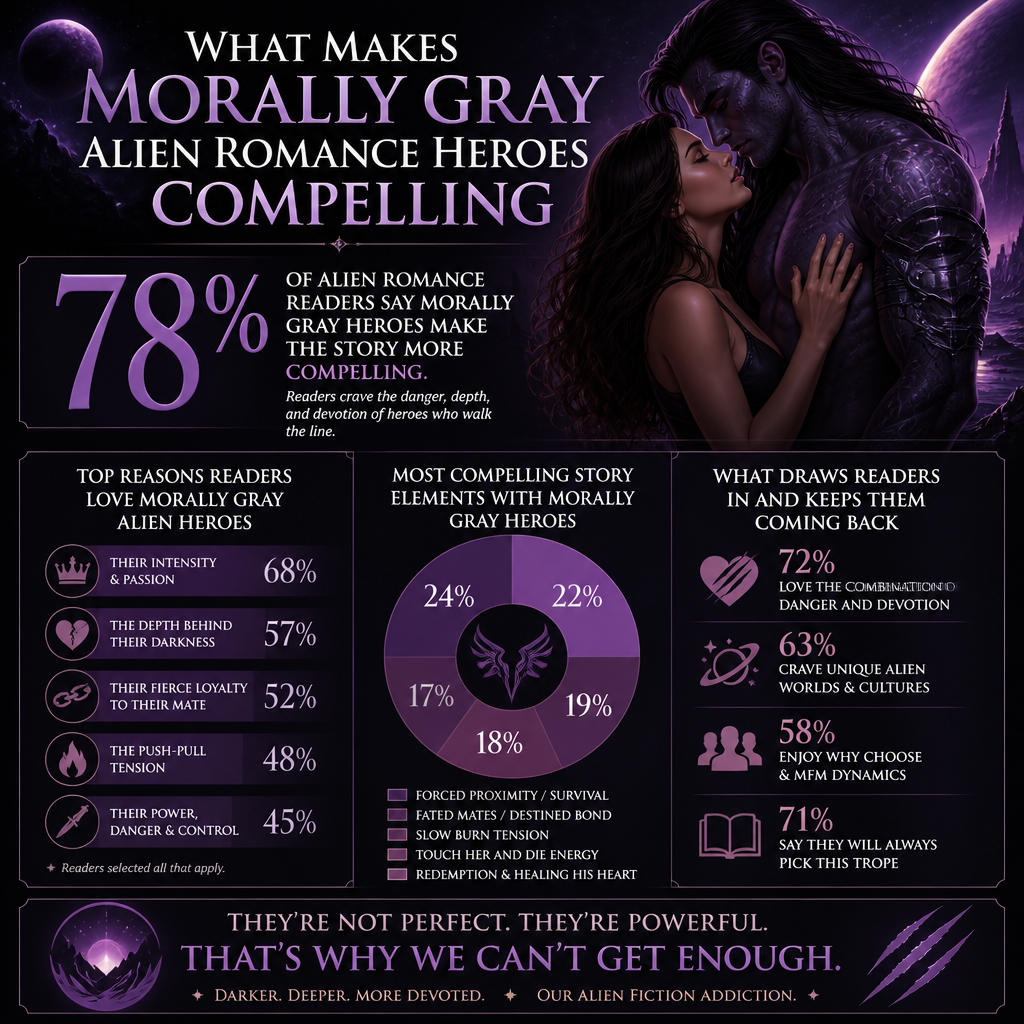
Morally gray alien romance heroes are compelling because they make desire feel dangerous without making the romance feel emotionally empty. They might be feared warriors, ruthless leaders, bounty hunters, or enemies with terrible reputations. Yet the heroine sees something nobody else does. A code. A wound. A fierce capacity for loyalty that only appears once she matters.
That tension is the real draw. You’re not simply watching a dangerous alien become nice. Honestly, that would be boring. You’re watching him decide what his darkness means now that love has entered the room.
The danger creates immediate romantic pressure
He changes the heroine’s ordinary rules
A morally gray hero brings pressure from the first scene. He may have no interest in being liked. He doesn’t offer a polished explanation for every action. He might threaten an enemy, break a law, or claim authority in a way that makes the heroine bristle.
That friction gives the romance somewhere to go. A heroine who’s used to protecting herself can’t simply nod and accept him. She pushes back. She questions his motives. She notices when his possessiveness crosses into control, and she makes him answer for it.
That’s especially satisfying in spicy science fiction romance because the emotional stakes and physical stakes tend to rise together. The alien hero may be the only person who can keep the heroine alive on a hostile planet. He may also be the person she least wants to trust. Now every argument carries heat. Every moment of protection becomes suspiciously intimate.
Threat works best with boundaries
There’s a difference between morally gray and simply cruel. I’m not interested in a hero who hurts the heroine and expects sexual chemistry to erase it. The compelling version has limits, even when those limits are buried under violence, pride, or a very alarming reputation.
He might be merciless toward enemies but careful with her consent. He might manipulate a political situation but refuse to betray his mate. He may have committed questionable acts in the past and still understand that love doesn’t grant him unlimited access to her choices.
Readers can enjoy danger because the story gives that danger shape. We know what the hero will protect. We know what he won’t do. That moral line may be strange by human standards, especially in an alien culture, but it needs to exist.
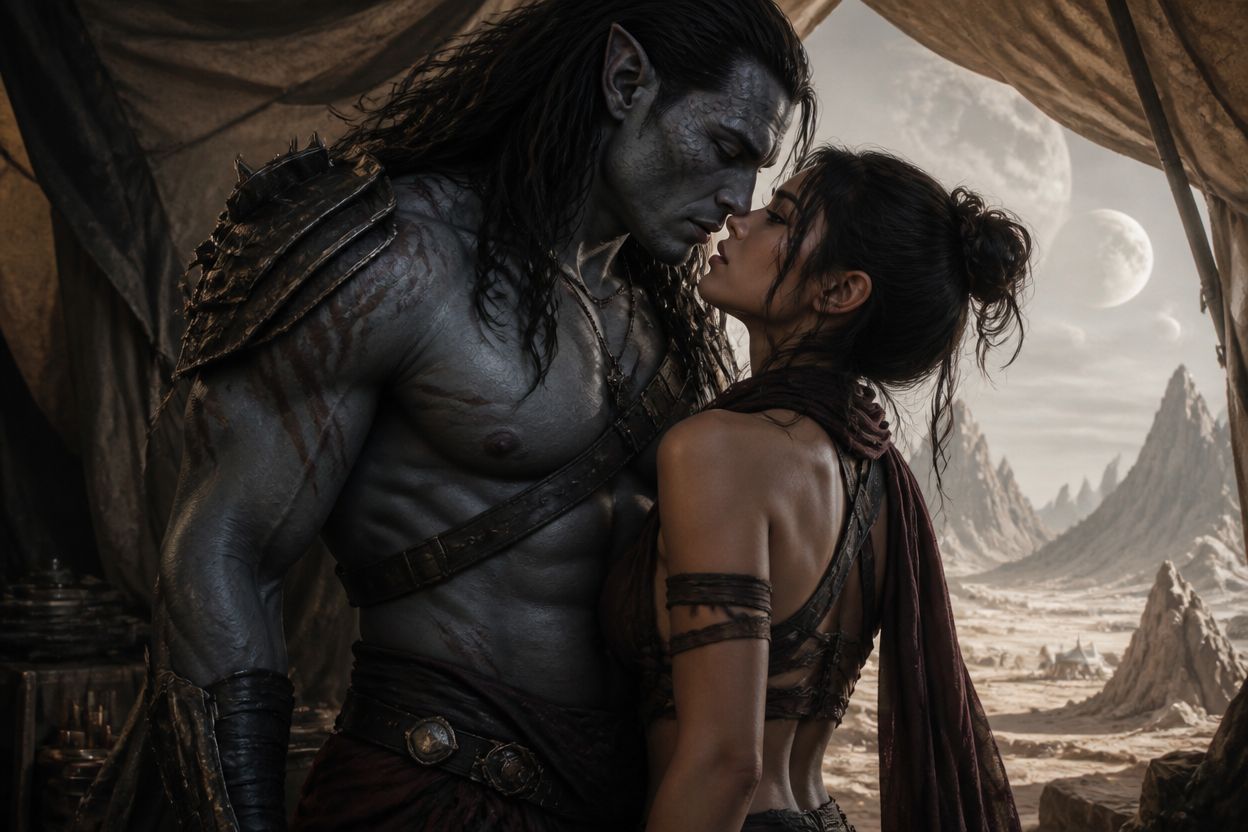
His softer side feels earned instead of automatic
Small acts reveal more than speeches
Morally gray heroes rarely win readers over with a long confession about how misunderstood they are. Thank goodness. Their tenderness usually appears sideways.
He remembers how she takes her food. He stands between her and a threat without announcing it. He gives her the warmer sleeping space on a freezing planet, then pretends the arrangement was practical. He learns which touch makes her relax and which one makes her pull away.
Those moments work because they cost him something. A feared alien warrior who is gentle with everyone isn’t especially mysterious. A feared alien warrior who has never been gentle with anyone, then handles the heroine as though she’s precious? That lands.
The heroine should see the whole person
The best romances don’t ask the heroine to ignore the hero’s darker qualities. She sees them clearly. She may even call him out in front of his crew, his rival, or an entire alien court. The emotional payoff comes from her refusing to flatter him into becoming acceptable.
And he doesn’t need to become harmless. He needs to become honest. There’s a big difference. A hero can remain intimidating, possessive, and capable of violence while learning to communicate, respect her decisions, and make room for her power.
This is one reason strong heroines matter so much in alien romance. A morally gray hero needs someone who can meet him as an equal. Otherwise, the relationship turns into admiration from a distance. Fun for a chapter. Thin across a whole book.
Alien culture makes his choices harder to read
Possessiveness can mean something different
Alien romance gets to play with relationship customs that don’t map neatly onto human expectations. A mating bond might be biological, spiritual, political, or all three. A bride lottery could be sold as a legal arrangement while feeling deeply personal to the people involved. A warrior’s claim might represent protection in his culture, even as the heroine hears it as control.
That gap creates delicious conflict, but the story still needs clarity. The heroine has to decide what she accepts. The hero has to learn that his cultural assumptions aren’t automatically binding on her.
In my experience, this is where fated mates work best. The bond can create undeniable attraction, but it shouldn’t do all the emotional labor. Chemistry may be written into their bodies. Trust is built through choices.
Rivals sharpen the hero’s personality
A morally gray alien hero becomes even more interesting when another warrior exposes his contradictions. One rival may be openly tender while the other is guarded. One may follow tradition, while the other breaks every rule except the ones that protect his mate.
That dynamic is part of the fun in MFM and why-choose romance. The heroine isn’t choosing between a good man and a bad man. She’s dealing with different versions of danger, loyalty, humor, and desire. The heroes may compete, argue, and irritate each other constantly. Yet shared survival can force them into cooperation.
Runaway Bridezilla, the first book in my Hate to Mate series, leans into that setup. Cordelia Lucius runs from the Galactic Union Bride Lottery, crash-lands on a hostile planet, and ends up needing Kavros Darkblade and Gorrath Korvax, the two alien warriors she refused to marry. They’re dangerous, infuriating, and not remotely prepared for a runaway bride who has opinions about everything.
That combination gives the romance room for sexual tension, survival stakes, and humor. The heroes aren’t softened into interchangeable love interests. Their rivalry is part of what makes the relationship spark.
The payoff comes from a choice, not just a bond
Fated mates and forced proximity can push characters together, but they can’t finish the romance on their own. The emotional payoff arrives when the hero chooses the heroine after the magical or biological urgency has stopped doing the pushing.
Watch for the turning point
Usually, the turning point isn’t a grand declaration. It’s the moment the hero gives up an advantage. He lets her leave. He tells her the truth even though it could cost him. He defies his people. He offers protection without demanding obedience in return.
That choice answers the question readers have been holding all along: does he want her, or does he want to possess her?
The distinction matters. Possession can create thrilling tension, especially in high-heat romance. But lasting romantic satisfaction requires the heroine’s agency. She needs room to want him back, not merely survive his attention.
- He respects a clear boundary even when he dislikes it.
- He protects her without treating her as helpless.
- He admits when his instincts are wrong.
- He risks status, safety, or power for her freedom.
- He chooses partnership after the initial bond takes hold.
That’s the point where a morally gray hero becomes romantic rather than merely exciting. The darkness remains, but it no longer controls the entire relationship.
FAQs for What Makes Morally Gray Alien Romance Heroes Compelling
Are morally gray alien heroes always possessive?
No. Possessiveness is common because it creates immediate tension, especially with fated mates and alien bonding customs. But a morally gray hero can also be secretive, politically ruthless, emotionally closed off, or willing to make brutal choices for his people.
What matters is how the story handles his behavior. I want to see consequences, honest conflict, and a heroine who has the power to push back. A possessive hero becomes much more satisfying when he learns that devotion isn’t the same thing as ownership.
Why do morally gray heroes work so well in survival romance?
Survival strips away polite behavior. Characters have to reveal what they value when food is scarce, danger is close, and there’s nowhere comfortable to hide. A hero’s protection can feel intimate because it’s practical and personal at the same time.
That setting also tests whether his darker instincts serve the heroine or endanger her. A dangerous warrior who kills a threat may be exactly what the situation requires. A warrior who ignores her wishes because he assumes he knows best has created a new problem. The best survival romances let the heroine judge the difference.
The appeal is danger with emotional accountability
Morally gray alien romance heroes work because they offer a fantasy of intensity without requiring emotional flatness. They can be frightening, possessive, culturally confusing, and fiercely competent. But the romance still asks them to grow in the places that matter.
I recommend looking for the hero’s choices after the attraction becomes unavoidable. Does he listen? Does he respect her freedom? Does he risk something real to earn her trust?
That’s where the good stuff lives. Not in making a dangerous alien harmless, but in watching him become safe for one particular woman because he chooses to be. For more adventurous pairings, visit The Complete Guide to Alien Romance Books and Tropes and browse Alien Warriors and Morally Gray Heroes. And if runaway brides, rival warriors, hostile planets, and high-heat MFM romance sound like your kind of trouble, Runaway Bridezilla is a very good place to start.