
Survival romance on alien planets works because it puts desire under pressure. The heroine can't stroll away after an awkward first date. She may be stranded, hunted, injured, or trapped with the one alien warrior who keeps looking at her like she's already his. Add a dangerous planet, a fated mating bond, and a hero with questionable morals, and suddenly every conversation carries real heat.
That pressure is the fun. Readers get romance with teeth. The relationship has to develop while the characters are solving problems, crossing hostile terrain, escaping enemies, and figuring out whether the possessive alien beside them is a protector, a threat, or both. In my experience, that's why these stories feel so addictive. The emotional stakes and the survival stakes keep feeding each other.
Danger makes every romantic moment matter
There is no room for polite distance
On a dangerous alien planet, attraction can't stay safely theoretical. The characters have to share shelter. Someone needs to tend a wound. A storm forces them into a cave, or a native predator drives them into the same narrow escape route. Forced proximity does what ordinary dating often can't. It strips away the small talk.
Readers see the hero's control begin to crack when the heroine is in danger. They see whether he protects her because of a mating bond, personal loyalty, or plain old obsession. Ideally, the answer is a messy combination of all three. That's much more interesting than a perfectly noble hero who never makes a questionable choice.
The heroine gets plenty to do, too. Survival romance works best when she isn't cargo with a pulse. She can identify edible plants, repair a damaged communicator, outsmart a patrol, or make a reckless decision that saves everyone. I want her frightened sometimes, absolutely. But fear shouldn't erase her intelligence. Watching a capable woman hold her ground against an alien warrior is half the pleasure.
Small acts become huge declarations
A blanket shared during a freezing night can feel more intimate than a grand speech. So can the hero giving up food, standing guard while she sleeps, or learning the human word for “safe” because she keeps using it. On a hostile planet, practical care carries emotional weight.
That is also where sexual tension gets sharper. A hand at her waist isn't just flirtation when a cliff edge waits behind her. A growled warning isn't just possessiveness when something is stalking the camp. The setting keeps reminding both characters that their bodies, trust, and choices matter.
Alien cultures make familiar tropes feel new
Fated mates and bride lotteries are familiar to romance readers, but alien societies give those ideas extra friction. A mating bond might be sacred to one character and deeply inconvenient to the other. A bride lottery might be treated as a prestigious tradition by the Galactic Union while the selected woman sees it as a complete loss of control. Both viewpoints can exist in the same story.
That's where the emotional conflict gets good. The heroine isn't required to swoon because the hero says destiny chose her. She can object. She can run. She can demand proof that the bond doesn't cancel her right to choose. And the hero has to face the difference between wanting someone and owning someone. Those aren't the same thing, even when his instincts insist otherwise.
Readers who enjoy The Complete Guide to Alien Romance Books and Tropes usually understand this instinctively. The appeal isn't only the unusual anatomy or the dramatic mating claim. It's the way familiar romance promises get tested by different rules, different bodies, and entirely different ideas about loyalty.
The best heroes have a culture to push against
An alien warrior becomes more compelling when his behavior makes sense within his world, even when the heroine finds it alarming. Maybe he was raised to believe that claiming a mate is an honor. Maybe his people show affection through protection and blunt physical contact rather than soft words. Maybe he has never had to ask for anything before.
That doesn't excuse every action. It gives the conflict shape. In my experience, morally gray heroes work when the story lets them change through specific choices, not a sudden personality transplant. He listens. He backs off. He risks his standing with his people. He learns that the heroine's consent isn't a temporary obstacle on the way to destiny.
Why readers can't resist two dangerous heroes
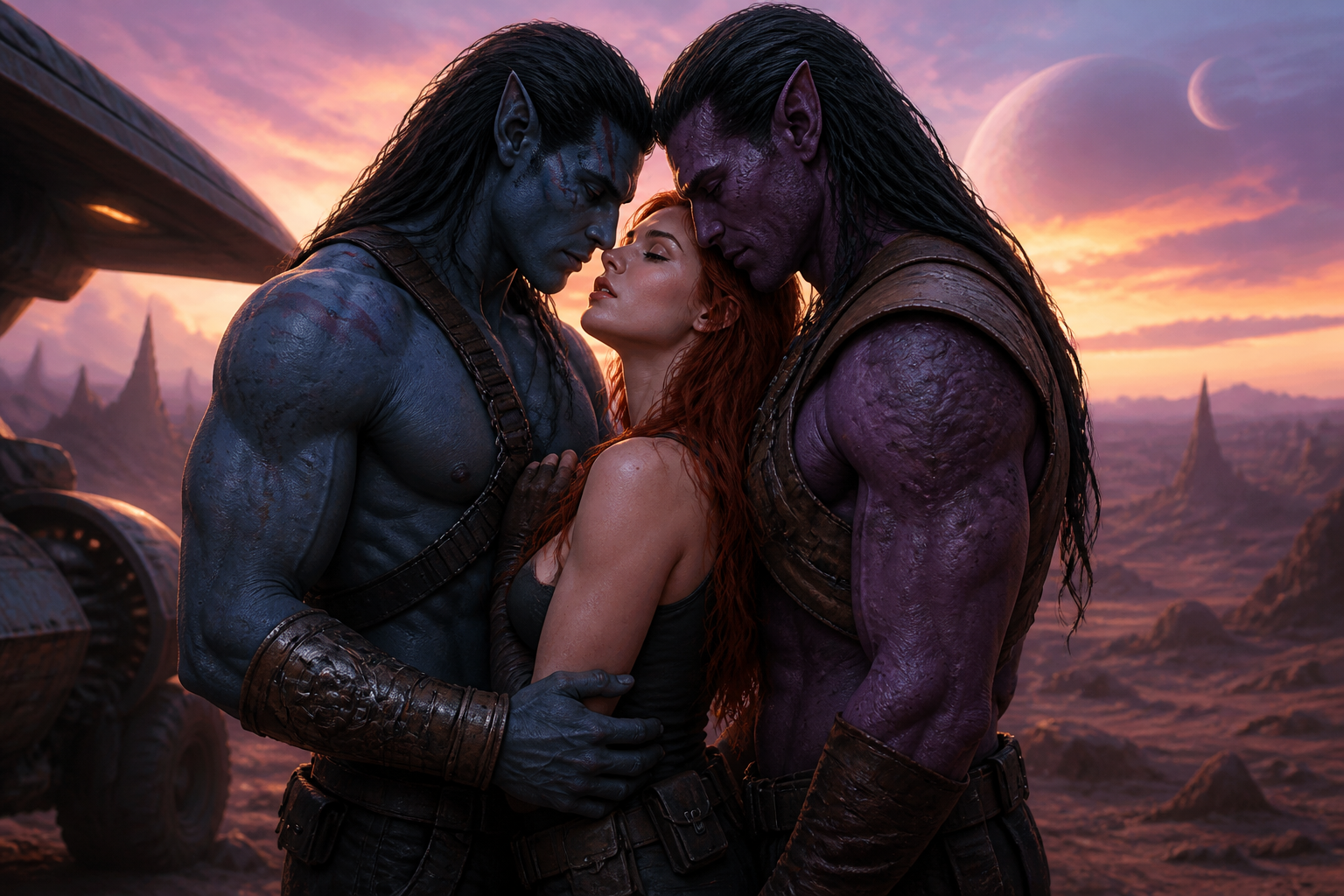
Why choose and MFM romance adds another layer of tension to survival stories. One alien warrior may be controlled, strategic, and terrifyingly competent. The other may be more impulsive, openly possessive, or emotionally blunt. They want the same heroine, but they don't necessarily agree on how to protect her or what she should be allowed to decide.
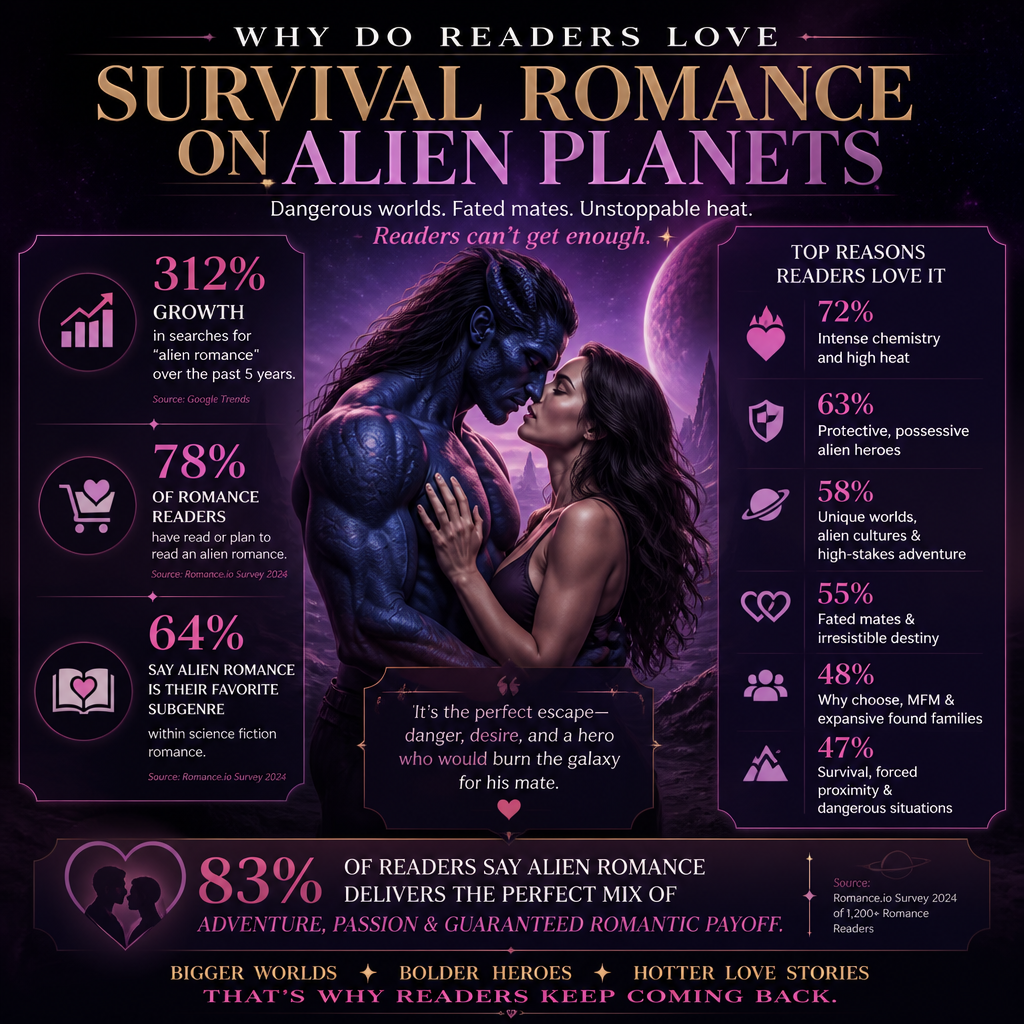
That triangle creates conflict without requiring the heroine to choose between two incomplete versions of a partner. She can have distinct chemistry with each hero. One understands her humor. One recognizes her fear. One makes her feel safe. The other makes her feel dangerously alive. And sometimes both are needed to survive the planet.
There are practical pleasures here, too. A two-hero romance can give the heroine more emotional support during an intense survival plot. She isn't carrying every scene alone. The heroes can challenge each other, tease each other, and reveal different sides of themselves around her.
In Runaway Bridezilla, the setup leans hard into that delicious complication. Cordelia Lucius runs from the Galactic Union Bride Lottery, crash-lands on a hostile planet, and ends up needing Kavros Darkblade and Gorrath Korvax, the two alien warriors she refused to marry. That's a wonderfully uncomfortable place to begin a romance. They have every reason to be offended. She has every reason to distrust them. Survival doesn't care about any of that.
Conflict keeps the chemistry moving
The strongest why choose romances don't make the heroes interchangeable. Their rivalries need texture. Maybe they disagree over risk. Maybe one wants to honor the mating bond while the other resents it. Maybe both are possessive, but one hides it behind discipline and the other makes no attempt to hide anything.
That difference gives the heroine room to build separate relationships instead of watching two men compete for the same line of dialogue. And yes, humor helps. A heroine caught between two enormous alien warriors should get to notice how ridiculous the situation is. Survival can be terrifying. It can also be deeply funny when everyone involved is stubborn, jealous, and running on very little sleep.
What to look for in a satisfying survival romance
Not every alien survival romance delivers the same balance. Some readers want a fast burn and immediate mating instincts. Others prefer a slow shift from hostility to trust. I enjoy either approach when the external danger supports the emotional arc instead of distracting from it.
These are the features I usually look for:
- A strong heroine with meaningful choices
- Alien heroes whose personalities and cultures feel distinct
- Forced proximity that creates actual emotional change
- A believable reason the characters must rely on one another
- Sexual tension that grows alongside trust
- A romantic payoff that feels earned
One warning, though. Survival can't become a convenient excuse for the heroine to accept behavior she clearly rejects. The story can play with possessiveness, dominance, and dangerous attraction. It still needs emotional logic. Readers notice when a hero's “protectiveness” is really just control with a prettier label.
I also recommend checking the series promise before starting. Some books end with a firm happily ever after. Others are tightly connected and leave major romantic questions open. Neither choice is wrong, but it helps to know what kind of ride you're boarding, especially when you want guaranteed romantic payoff rather than a cliffhanger that leaves you glaring at your e-reader.
For readers who specifically want high heat, alien warriors, survival adventure, and bride lottery drama, Survival Romance on Dangerous Alien Planets is a useful place to find that particular flavor of romance.
FAQs for Why Do Readers Love Survival Romance on Alien Planets
What makes survival romance different from ordinary science fiction romance?
The setting creates constant pressure on the relationship. The characters often have to cooperate before they trust each other, and attraction develops alongside immediate physical danger. That gives every touch, argument, and protective choice more weight. Science fiction romance can focus on space travel, politics, or futuristic society. Survival romance keeps the emotional spotlight close to the characters and the threat right outside their shelter.
Are survival romance books always dark?
No. They can be intense without being bleak. Many include humor, banter, resilient heroines, ridiculous cultural misunderstandings, and heroes who are terrifying to everyone except the woman they adore. Runaway Bridezilla plays with danger and possessive alien warriors, but it also has room for the absurdity of being stranded with the two men you were actively trying to avoid.
Why this romance keeps calling readers back
Survival romance on alien planets delivers a very specific fantasy: being wanted fiercely while proving you can stand on your own. The heroine gets danger, adventure, and a relationship that can't hide behind easy circumstances. The heroes have to earn trust in a world that keeps testing everyone.
That combination is hard to resist. Especially when the story adds fated mates, a bride lottery, two rival alien warriors, high heat, and a heroine who refuses to behave like anyone's prize. If that sounds like your kind of trouble, Runaway Bridezilla is a strong place to start with Mia Odetti's Hate to Mate series.